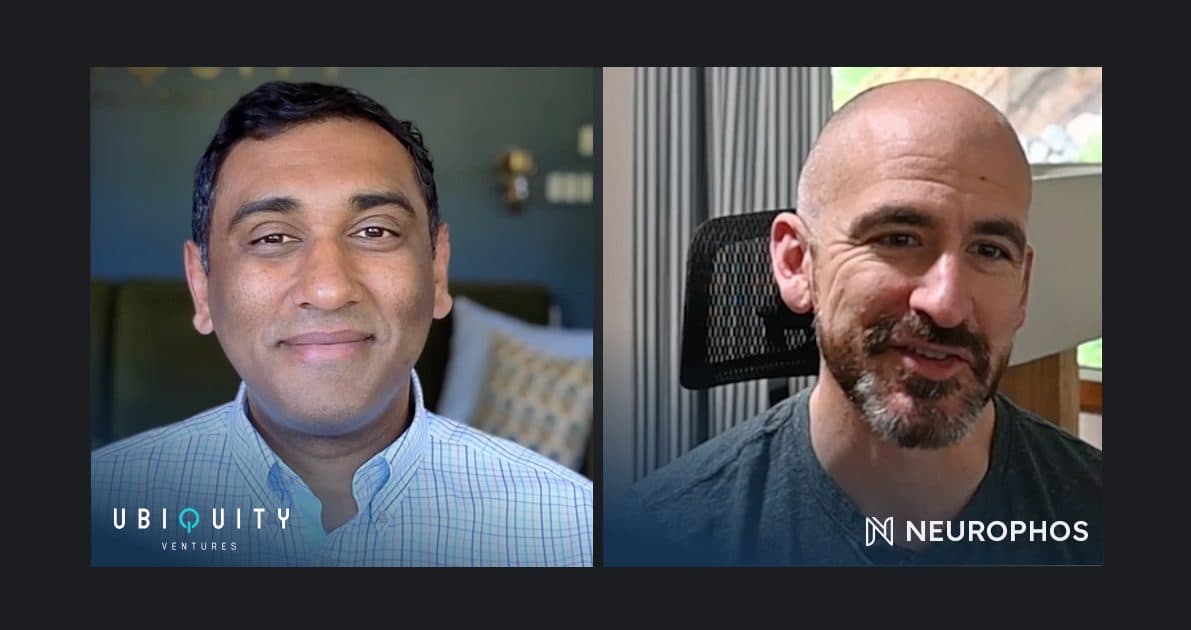
Make Your Customer the Hero, with Nathan Kundtz
“If you show up and talk about yourself when you’re supposed to be selling, you will fail.”
That’s according to Nathan Kundtz, previously founder/CEO of Kymeta and Rendered and now CTO of Neurophos, who has also mentored more than 100 tech entrepreneurs. It’s easy for founders to start seeing themselves as the hero of the story, especially when they’re bringing something new into the world to solve a problem they’ve experienced firsthand. But that can also make it harder to remember who the business is really about: the customer.
In this Ubiquity University session, Nathan draws on his own experience as a founder and CEO to unpack how the hero mindset can affect everything from sales and board meetings to how you lead your team.
This also marks our 50th Ubiquity University video, and we’re grateful to Nathan for sharing some of his hard-earned wisdom with us.
The hero’s journey is a great storytelling tool
Startup stories map almost perfectly to the classic hero’s journey. A founder encounters a problem, goes through an ordeal, develops some hard-won insight, and emerges with something new to bring into the world. It’s a classic storytelling structure, and even investor pitch decks tend to follow some version of it: the problem, the solution, the technology, the team, and what comes next.
Founders have good reasons to tell their stories this way. It helps investors understand why they started the company, what it took to build it, and why they’re the right person to keep going. As we’ve written before, especially in deep tech, part of a founder’s job is giving investors the context they need to understand what they’ve built.
After telling that story enough times, though, it can become part of how you see yourself, and that can start to shape how you run the company. You may measure success differently, push harder when something isn’t working, or have a harder time admitting when you need help.
What goes wrong when the founder makes themself the hero
Nathan sees three common problems with the hero mindset:
- You measure the wrong things. Nathan calls this the wrong cost function: you start measuring yourself against the idea of a successful founder rather than how much value you’re creating for customers.
- You force things. “Founder mode” has its place, but pushing harder isn’t always the answer. Sometimes you need to talk to customers, understand why something isn’t working, or find someone who knows the problem better than you do.
- Business failures start to feel personal. If being a successful founder is part of your identity, admitting that something isn’t working gets harder. Nathan has seen this show up in board meetings, where founders struggle to share bad news because it conflicts with the story they’ve been telling themselves.
Put your customer in the hero role instead
Nathan thinks founders should cast themselves differently: the customer is the hero, and the founder is the mentor.
You can see the difference in a conversation with a potential customer. You could talk about why you started the company and how hard the technology was to build. Or instead you could ask what they’re trying to accomplish, what’s getting in their way, and whether your product can help them get there. Show them how you can a role in unlocking their greatness.
The same thinking can help you decide what’s worth your time. Nathan mentions press, speaking on stage, and building a public following as things that can feel like success without necessarily creating much value for customers.
Sunil described these as local maximums. The bigger thing to optimize for is the value you’re creating for customers.
The mentor role applies inside the company, too. If you’re always jumping in to solve every problem, the company can start to depend on you doing it. Nathan recommends hiring great people, helping them succeed, and giving them responsibility.
Nathan’s shorthand for it: Don’t be Batman, be Alfred. Instead of always saving the day yourself, help the people around you succeed.
Nathan and Sunil go deeper on the founder-as-hero mindset and what changes when you start putting customers first.
Watch the full session here