Why Ubiquity Invested in Loft Orbital Before Space Infrastructure Had a Business Model
In August 2019, Ubiquity backed Loft Orbital. At the time, the company had a compelling idea, a small team, and no assets in orbit. Commercial space infrastructure was not yet a major VC investment category. Most VCs who had come to the sector during the 2015 to 2018 wave were already pulling back, and the SPAC craze that would briefly reignite interest was still two years away.
What Loft had was a thesis worth backing: turn an aerospace engineering problem into a software engineering problem.
Space has been part of the Ubiquity story since before the firm existed. I started investing in the sector in 2014, co-leading Rocket Lab's round while at Bessemer, after Peter Beck walked into the office with a prototype 3D-printed engine and explained how his electric turbopump could be tuned by changing not atoms but lines of code. That was the moment the software beyond the screen thesis clicked in the context of space. Rocket Lab looked to me like a software company that happened to launch things. It has since joined the Nasdaq-100.

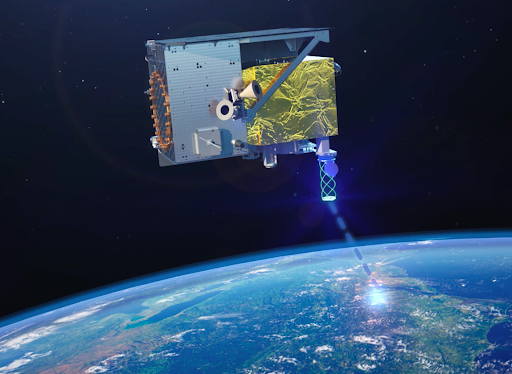
Loft Orbital was the same insight applied one layer up the stack. A traditional satellite is 80 percent custom engineering wrapped around 20 percent standard parts, which is why a dedicated payload historically took five to ten years and hundreds of millions of dollars to reach orbit. Loft inverted that ratio. It buys flight-proven buses off partners' production lines and tops them with the Hub, the spacecraft's brain, a universal adapter that lets any payload fly on any bus and doubles as an edge compute environment for running AI workloads in orbit. Above it sits Cockpit, their mission control software that runs the whole heterogeneous fleet.
The result is that customers hand Loft a sensor or a software application, and Loft handles everything else, from integration and launch to operations and downlink. A customer states what they want collected through a UI or API, and Cockpit resolves that intent into a validated schedule of spacecraft tasks and uplinks it to the satellite. Loft's customers get to use space without having to know how space works.
Loft CEO Pierre-Damien Vaujour described it simply in a 2023 interview on the Ubiquity blog: "We are turning an aerospace engineering problem into a software engineering problem."
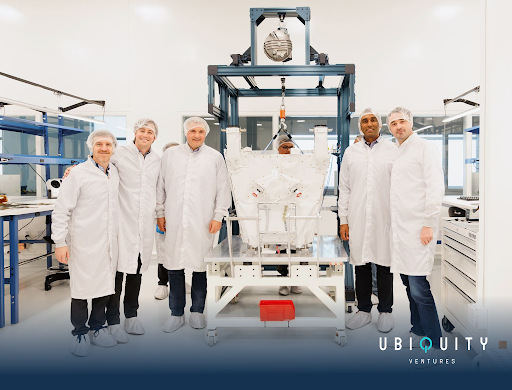
I was the first to call Loft "AWS for space." AWS won by abstracting the infrastructure layer so developers could focus on applications. Loft does the same thing for orbit. Customers who could never have justified the cost or timeline of a dedicated satellite can now get to space in months.
How Loft Orbital proved the space infrastructure model
Every generation of Loft's fleet has answered a different disbelief.
In 2019, the doubt was the model itself. Then in June 2021, Loft launched YAM-2 and YAM-3, the world's first two commercial rideshare satellites, carrying ten customer payloads spanning DARPA, the UAE Space Agency, Eutelsat, and several newspace companies. I was at Kennedy Space Center to watch the launch. A small team had taken a software-native approach to one of the most technically complex industries on earth and made it work. YAM-3 is still operating today.
The next doubt was whether software mattered in space. In 2023, Loft launched YAM-6, an open compute platform where developers could deploy applications directly onto orbiting infrastructure without owning any hardware. More than a dozen AI and software missions have since flown on Loft's platform for customers including NASA, Microsoft, and Helsing, doing everything from tracking vessel movements to detecting radar jamming.
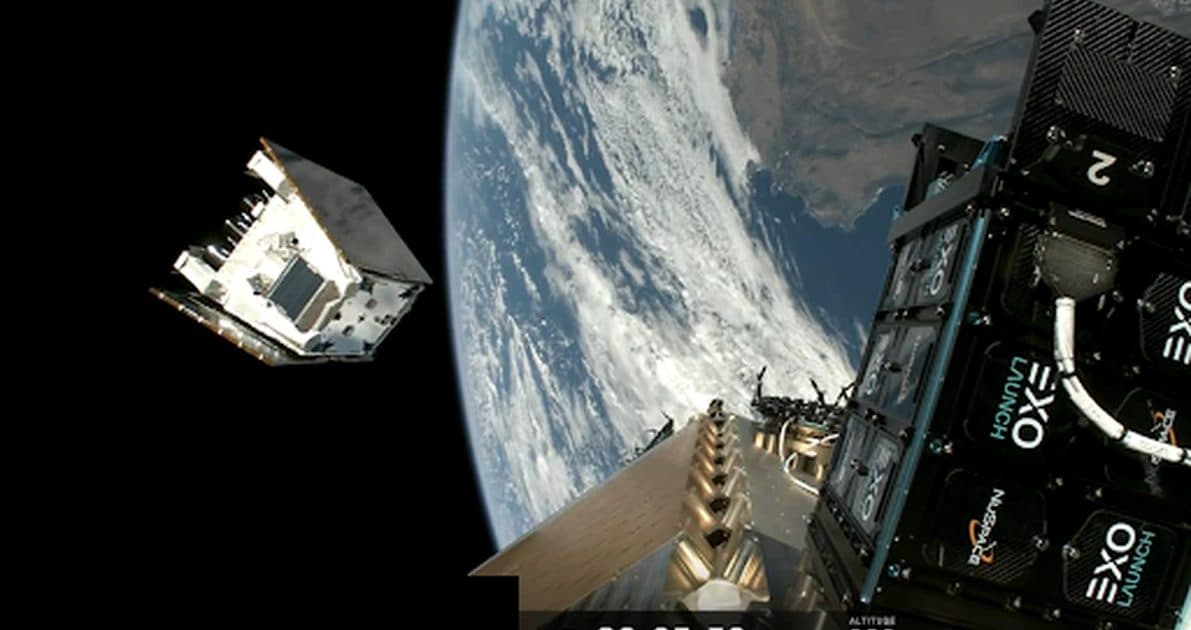
The most recent doubt was whether AI in orbit could be more than a demo. In April 2026, a NASA JPL software package running Google's Gemma 3 model on Loft's YAM-9 satellite became the first reported vision-language model to operate in orbit. For the first time, an Earth observation satellite found what it was looking for in response to natural language queries, with no analysts on the ground. As Loft's head of AI Paul Lasserre told TechCrunch, "It opens the door to always-on patrol layers in space. If you have a VLM, you can have logic, like 'monitor this border for me, and let me know when something is suspicious,' and interact back and forth with the satellites."
Loft Orbital today, from unicorn status to sovereign constellations
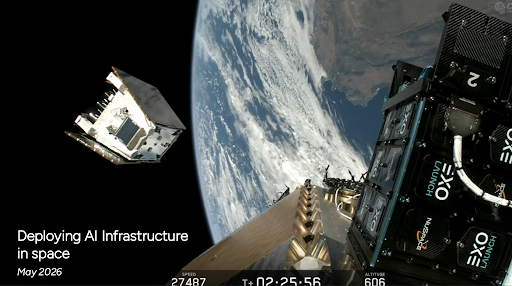
Loft just marked five years in space, and the company's own telling of that arc, from one satellite to constellations, maps exactly onto the thesis we backed in 2019. In those five years the business has compounded. Loft has become a unicorn, raised a $170M Series C, and has closed more than $500M of total bookings. It signed a $150M+ contract to build, launch, and operate EarthDaily's 10-satellite Earth observation constellation, and in June 2026 deployed six of those satellites on a single launch, the largest batch in company history, doubling Loft's on-orbit fleet in one day. Loft has launched 15 satellites to date, is in the middle of a campaign to deploy more than 20 satellites across 18 months, and expects its launched count to double again in 2027.
The sovereign story may be the most surprising validation. Nations increasingly want space infrastructure they own and control without spending a decade building it. Loft is the prime contractor on France's first sovereign synthetic aperture radar program, a $50M contract with the French defense procurement agency. Through Orbitworks, its Abu Dhabi joint venture, Loft opened the first satellite production facility in the Middle East, and this fall Orbitworks will launch Altair, a 10-satellite, AI-enabled constellation with GPUs on every satellite, the world's first operational constellation built for edge compute and on-orbit decision-making. All of this from a company of roughly 300 people.
Why AI in orbit is the next unlock for space investing
In a recent conversation with Space News about space investing and the software beyond the screen thesis, I made the case that applying AI is the next unlock for space. When a satellite can make decisions autonomously during its pass window overhead, a $5M asset can deliver the value of a $50M one. Take wildfire detection. A satellite senses a raw image stream, detects the fire onboard, and hands off an alert while still overhead. Gigabytes of imagery become a 140 character alert in minutes. Loft is already seeing this show up in customer payloads, and the progression from sensing to actuation, from data collection to on-orbit decision-making, is exactly where software beyond the screen goes next.
The thesis has held: the infrastructure layer for commercial space is real, it has paying customers, and Loft is operating the largest commercial fleet flying customer missions. The companies that built this layer before the category had a name are now defining what the category looks like.
Nerdy and early. In 2019, before any of this was obvious.
