What Investors Hear in the First 30 Seconds of Your Pitch
In the fall of 2014, Rocket Lab’s Peter Beck walked into my office at Bessemer carrying parts of a 3D-printed rocket engine, three years before Rocket Lab reached orbit. He could have opened his pitch with the electric turbopump, a genuinely revolutionary piece of engineering that lets you precisely control and modify the flow of propellant with lines of C++ instead of being locked in with physical gears.
Instead, he told me about specific people he knew who were struggling with getting their satellites to orbit because they had to rideshare/hitch-hike alongside larger and more important satellite customers. He helped me understand through their eyes that these small satellite operators were dying to have a launch vehicle built for their smaller satellites so they could control their own destiny. I knew that pain firsthand from Skybox board meetings, where launch was a constant constraint. Once I had that context, I wanted to understand the technology behind it.
Most founders I meet would start with the turbopump.
Every pitch sits somewhere on a spectrum with four stops. Say an engineer at Waymo leaves to start a camera company and comes to pitch me for funding. It’s the same founder and the same camera each time, but the first sentence out of their mouth can go four ways.
“If I left Waymo, I could build a totally new kind of camera.”
→ Look what I could do. Nothing has happened yet and the founder is focused on the technical aspect.
I haven't told my boss, but I’ve been hacking on this with nights and weekends to get a new camera working, and it captures images at 10x the typical framerate.
→ Look what I did. Better. There is a real thing now, but the camera’s technical specs are still the focus.
This new camera uses its higher sensitivity to see in the dark and around corners.
→ Look what it accomplishes. Now we are getting somewhere.
Millions of Americans are injured in car accidents every year but with a camera that sees around corners and at night, we could prevent a large portion.
→ Look who cares. That is the one I lean forward for in pitches. Once I know why the camera matters, I’m happy to hear about the tech.
Ubiquity lives on the right half of that spectrum. Tech innovation still matters enormously, and we go deep on it in diligence. But customer impact is harder for an investor to assess from the outside. The founder has to make the impact legible.
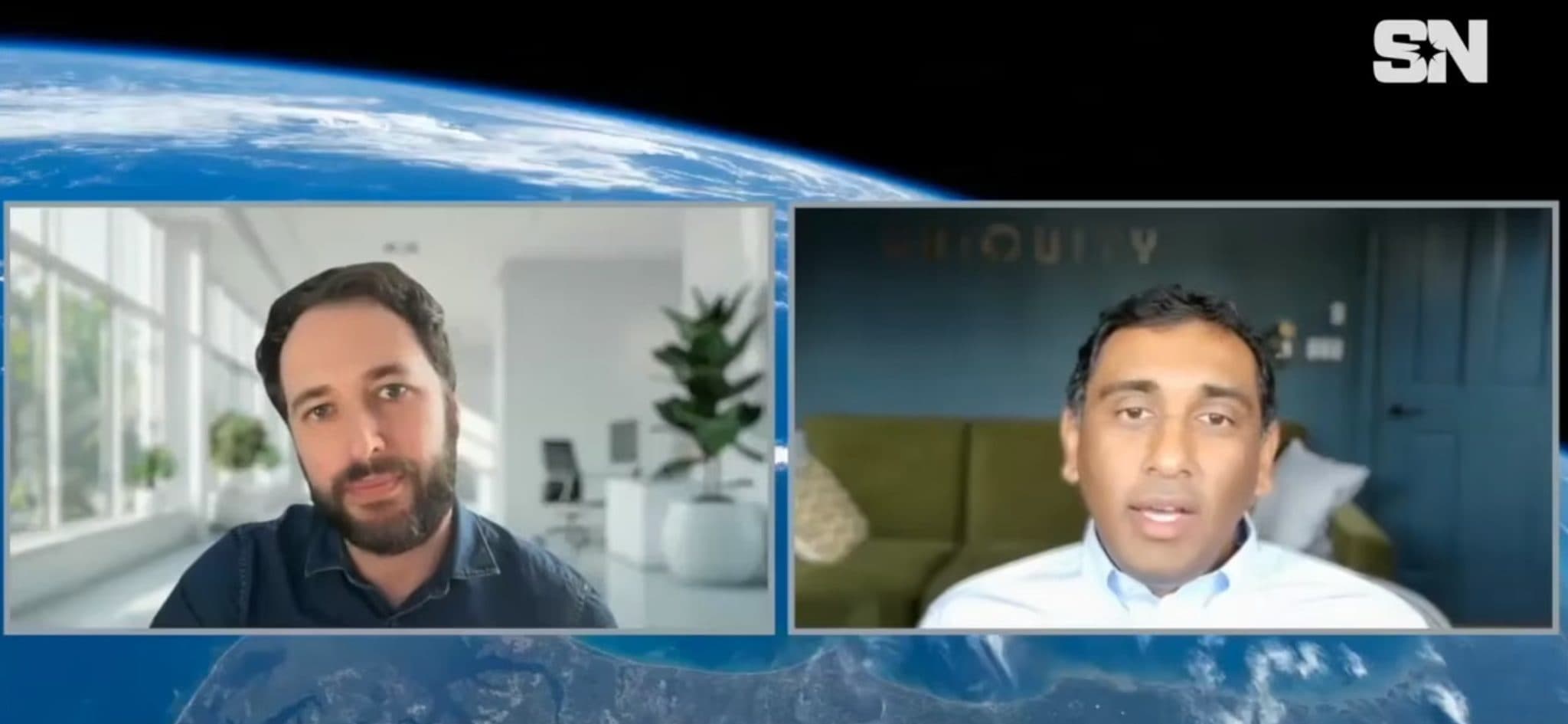
I got into this on the Space News podcast a while back, if you'd rather hear it than read it.
Video Transcript:
What are the biggest challenges space startups face when trying to raise venture capital today? And any key advice for founders looking to secure investment?
Yeah, it's a great question. I see a pretty common issue with space startups, and and that is actually a issue across all startups, but definitely deep tech startups, which deep tech includes you know many other more technical areas, and I would summarize it as there's a spectrum between look what I can do versus look who cares, and it turns out in deep tech it's very hard to do these things. You have to be skilled, it takes energy, you have expertise, training, and so it's very natural to pitch a company saying look what I can do! Look how hard this is! It takes all this energy. I've achieved six gigawatts, or I've achieved this altitude. Achieve right? As opposed to the other end of the spectrum is doesn't matter how it works. Look who how happy they are, right? How much these customers want it, right? And it's a very jarring transition. And the founders I back, and the ones that are most successful, even Peter, back in 2014 when he pitched this the first time, he said, "Look, this will enable blah blah blah blah blah. He didn't only when I asked as a nerd, I asked how exactly does the electric turbo pump work. He went into it, but up until then, it's about the impact, it's about the customer interest. So in a lot of the space pitches, I think tilting them more towards the eventual impact and who who cares would be great. Avoiding the word "imagine if, right? That's also sort of theoretical, and that is tricky for mainstream investors and even space investors. It sort of requires two or three hops. It's a theoretical concern. Versus, I've talked to five real people, and they said if I were able to offer one kilobit of data connectivity to any field in the country, they would be interested, right? That changes everything, and then we can talk about how you achieve the one kilobit of of data connectivity. So, so that transition is a critical one. Then there's the idea of this is kind of endemic to communication comms versus observation. With many of the comms companies that pitch me, and because they're deep in the solution as opposed to the impact, they think well, yeah, I can put up something, but you really got to have 20 of these birds up, and that requires 200 million. So will you invest 200 million? It turns out nobody will invest 200 million off the bat, and and it is a tricky thing because if it's important comms, it needs to be persistent, meaning you need to sort of transition from one to the other. So you need to launch all at once.
“Wouldn’t it be neat if…”
One phrase I listen for is “wouldn’t it be neat if…” The trick here is that a founder may be communicating a technical accomplishment worth commercializing but this phrasing focuses on the innovation vs. the customer pull. This can often lead to being too enamored with an innovation and its difficulty to be vigilant when making product cuts to bring it to market effectively and in the form customers want.
Where this bad habit comes from
The pull toward the left end of this spectrum is strong. You spent years becoming one of the few people alive who understands a hard technical system, so being told to open with customer anecdotes can feel like you’re shortchanging the technology and your background. In deeptech, that instinct can turn into some version of: You wouldn't understand. It's really hard. I did a PhD in this. All of it tells the investor across the table to stop asking questions.
The founders we invest in at Ubiquity tend to start closer to “look who cares.” Craig Piggott opened his Halter pitch with a dairy farmer losing money every day his cows break through a fence. Keith Corso from BusRight talked about districts cancelling routes they had no drivers for. Erez Kaminski from Ketryx told me about a medical device company failing to bring a new product to market due to the regulatory and compliance burden.
The worry I sometimes hear from technical founders is that leading with the customer means the technology never gets its turn. But helping me understand the customer pain and that you are customer-obsessed actually enables me to happily sit through forty minutes on the technical architecture and ask sharper questions the whole way. Craig, Keith, and Erez all got that forty minutes, and all three eventually received seed investments from Ubiquity Ventures. They just did not focus the start of their pitches on the technical innovation exclusively.
Before your next pitch, read your opening two sentences out loud and ask where they fall on this four-stop spectrum between technical innovation and customer impact. If they land on either of the first two, time to rethink how you’re telling the story.
For more on pitching deeptech investors, including how to make technical progress legible to someone with no map for it, read this.
Know a founder who leads with who cares? Send them our way at hello@ubiquity.vc.
